Friday, October 17, 2014

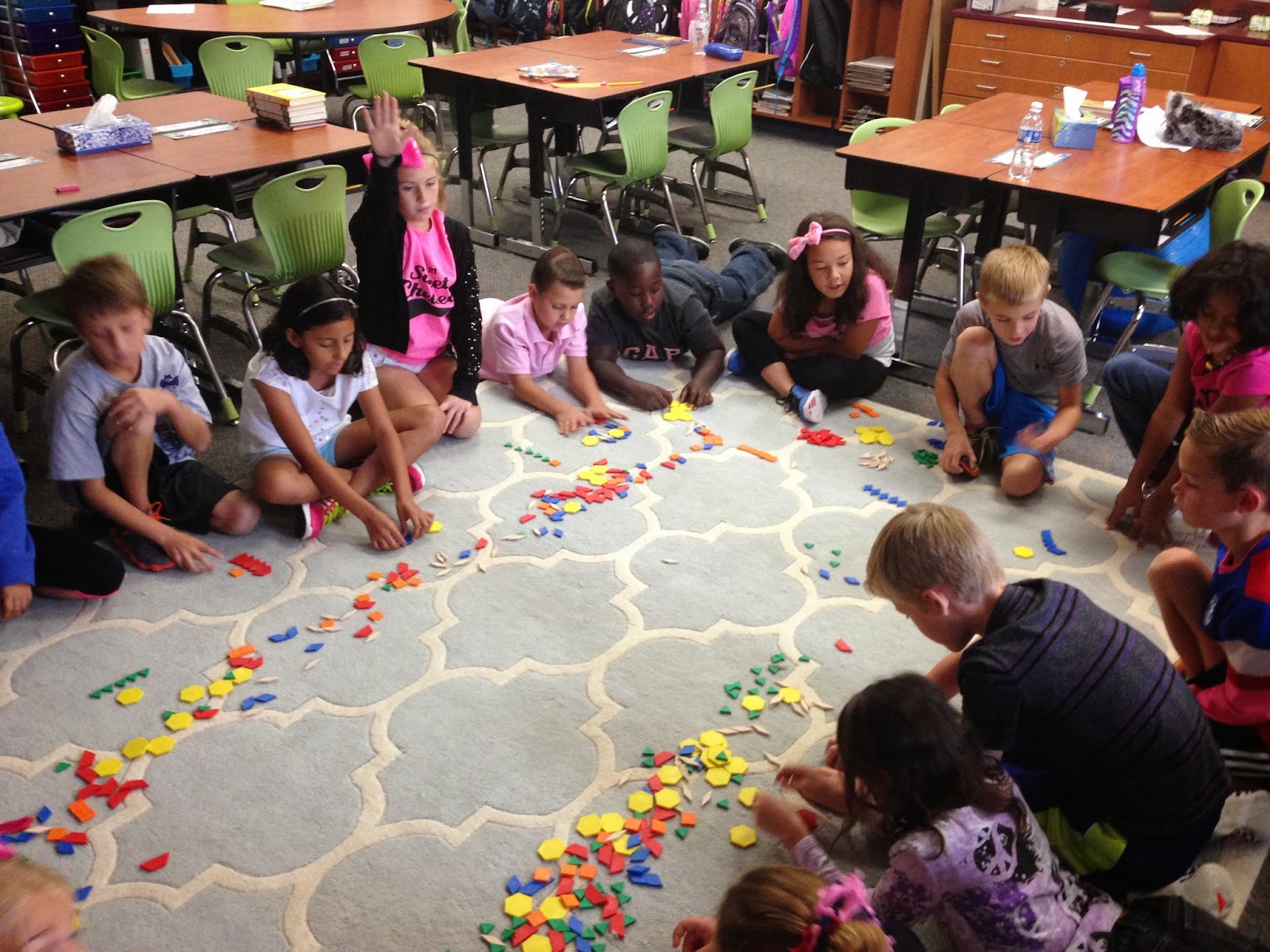
Math: Comparing Fractions

Today students compared fractions using fraction tiles and fraction towers. 


Tuesday, October 14, 2014

Field Trip: Dallas Symphony Orchestra

The entire third grade had the opportunity to head downtown to was a performance by the Dallas Symphony Orchestra. It was a very fun trip and the kids had a blast.

Excited to be leaving school for a fun trip!


We unloaded the bus and the kids were excited. We quickly lined up to head inside.


 We had some front row seats. When we entered, there was a woman playing the gigantic organ. She played The Adam's Family theme song and the kids LOVED it!

The performance was almost an hour long. Our school did an amazing job being polite and respectful. They clapped when appropriate and stayed quiet during musical performances.

Here is a class picture right before we got back onto the bus.


We drove to Finch Park for lunch. Everyone had a great time and the weather was perfect!


Another class picture on the playground before we headed back to school.


I would like to thank our awesome parent volunteers for helping out. You both did a fantastic job! THANK YOU!!!

Friday, October 10, 2014

Writing: Author's Chairs

Due to our scheduling I was finding it difficult to allow all students to take the time to share some of their writing. I decided to have 3 Author's Chairs going on at the same time. The class enjoyed it. 

As soon as they finished their writing piece, they chose a group to go to. They were describing a Critical Setting. We started a Haunted House piece together as a class and then they had the chance to add on to it. I put some spooky classical music on (thank Pandora) and it really helped set the mood.


Thursday, October 9, 2014

Science: Sink or Float

We had a class experiment with common classroom objects to see if they would sink or float.
Students were first asked to make a prediction for each item and record it on the data chart. We tested each object and discussed why it sank or floated. The idea was to discuss the physical properties of matter of each object.

A goal we had was:
Have students explain why the ability of an object to sink or float is considered a physical property of matter.  (It is a physical property of matter because it describes the object, just as color, shape, size, and state of matter also describe objects.)


TEKS:
measure, test, and record physical properties of matter, including temperature, mass, magnetism, and the ability to sink or float.[5A] 

analyze and interpret patterns in data to construct reasonable explanations based on evidence from investigations.[2D]

Math: Fractions on a Number Line

Today we created a number line and discussed fractions. As a class we folded the paper strip into ½, ¼, 1/8halves, fourths, eighths, sixths, and thirds. We found that some of the fractions landed in the same place. This lead us into the topic of equivalent fractions.


TEKS:
represent fractions of halves, fourths, and eighths as distances from zero on a number line.[3.7A]

represent fractions greater than zero and less than or equal to one with denominators of 2, 3, 4, 6, and 8 using concrete objects and pictorial models, including strip diagrams and number lines.[3.3A]
represent equivalent fractions with denominators of 2, 3, 4, 6, and 8 using a variety of objects and pictorial models, including number lines.[3.3F]

determine the corresponding fraction greater than zero and less than or equal to one with denominators of 2, 3, 4, 6, and 8 given a specified point on a number line.[3.3B]

FUN RUN: Dunk Tank

Our school raised over $41,000 dollars this year with our FUN RUN! As a reward, students will have the opportunity to throw balls at Mrs. Raleeh and additional staff members while they sit in a dunk tank. The whole school is so excited for October 15th!


Wednesday, October 8, 2014

Math: Fractions with Pattern Blocks

This week we began our unit on fractions. Today we worked on creating fractions with pattern blocks. We talked about how you can create a fraction from a group. 

We discussed the vocabulary:
Numerator: the number of pieces the problem is talking about. (Sometimes shaded/unshaded)
Denominator: the number of total pieces in the whole.

This was a great hands-on activity that students could represent fractions. Here is an example that we discussed in class:

I have a garden that I cut into six parts.  I want to use four parts of the garden to plant roses.  Show me with your pattern blocks what that fraction would look like.


As a class, we came up with additional problems that they might encounter in real life. 


TEKS:
represent fractions greater than zero and less than or equal to one with denominators of 2, 3, 4, 6, and 8 using concrete objects and pictorial models, including strip diagrams and number lines.[3.3A]